
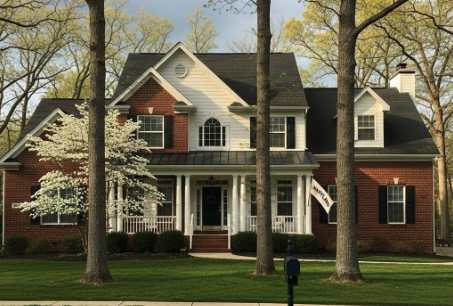
Buying a home in Maryland comes with both opportunity and competition. From waterfront properties along the Chesapeake Bay to suburban neighborhoods outside Washington, D.C., the state’s real estate market is diverse. To successfully navigate it, homebuyers should understand the 2026 Maryland conventional loan limits and how they affect financing options.
What Are Conventional Loan Limits?
Conventional loan limits represent the maximum amount borrowers can finance through conforming loans backed by Fannie Mae and Freddie Mac. These limits are set each year by the Federal Housing Finance Agency (FHFA) and are based on housing market trends.
For 2026, the baseline limit for a single-family home is $766,550. However, several Maryland counties qualify as high-cost areas, where limits can climb higher to match increased property values.
2026 Conventional Loan Limits in Maryland
Maryland’s proximity to Washington, D.C. and its blend of suburban and urban markets impact its loan limits. Here’s what buyers need to know:
- Baseline Limit: $766,550 applies in most counties.
- High-Cost Counties: Counties like Montgomery, Prince George’s, and Howard may see limits rise to $1,149,825.
- Multi-Unit Properties: Duplexes, triplexes, and four-unit homes carry higher limits, offering flexibility for multi-generational households and investors.
These differences allow Maryland buyers in higher-priced areas to qualify for more financing without moving into jumbo loan territory.
Why Loan Limits Matter for Maryland Buyers
Understanding loan limits can help you plan your purchase strategically:
- Staying within conventional loan limits allows you to benefit from easier qualification standards and competitive interest rates.
- Homes priced above the conventional limit will require a jumbo loan, which comes with stricter requirements such as larger down payments and stronger credit.
- Transitioning from a baseline county to a high-cost county could increase your borrowing power significantly.
For buyers in Maryland’s active markets, this knowledge can make the difference between winning and losing out on your dream home.
Understanding loan limits can help you plan your purchase strategically:
- Staying within conventional loan limits allows you to benefit from easier qualification standards and competitive interest rates.
- Homes priced above the conventional limit will require a jumbo loan, which comes with stricter requirements such as larger down payments and stronger credit.
- Transitioning from a baseline county to a high-cost county could increase your borrowing power significantly.
Advantages of Conventional Loans
Conventional loans remain a popular choice for Maryland buyers because they offer several benefits:
- Low down payments starting as low as 3% for eligible borrowers.
- Competitive rates compared to other financing options.
- No upfront mortgage insurance premium, unlike FHA loans.
- Flexible refinancing opportunities to adjust your loan in the future.
These advantages make conventional loans well-suited for both first-time homebuyers and repeat buyers in Maryland.
FAQs About 2026 Maryland Conventional Loan Limits
The baseline limit is $766,550, with high-cost counties reaching up to $1,149,825.
Yes. Counties like Montgomery and Prince George’s have higher limits due to elevated home values.
Loans above the limit become jumbo loans, which involve stricter approval requirements.
Yes. Limits for two to four unit homes are higher than those for single-family homes.
Conventional loans offer flexibility, lower long-term costs, and competitive interest rates.
Final Thoughts
The 2026 Maryland conventional loan limits provide clarity for buyers navigating today’s competitive housing market. Whether you’re eyeing a starter home in Baltimore, a suburban property in Montgomery County, or a waterfront residence along the Eastern Shore, knowing the loan limits helps you plan ahead.
If you’re preparing to buy in 2026, now is the perfect time to speak with a mortgage professional. They can explain your eligibility, guide you through county-specific limits, and help you secure financing that fits your goals.